
It started in 1953 with one room, one idea, and 60 students. Today, International House is 135+ schools in 45+ countries and the network that invented modern English teacher training.


In 1953, John and Brita Haycraft opened a school called Casa Internacional in Cordoba, Spain. John was an inspiring teacher and an educational pioneer. He believed that language learning should be about communication, theatre, and understanding between people not drills and rote memorisation. Lessons were about meeting together in a relaxed atmosphere and having fun together.
The school was one room. But within three weeks, through publicity and word of mouth, there were 60 students. That school still running today in the old quarter of Cordoba was the beginning of everything.
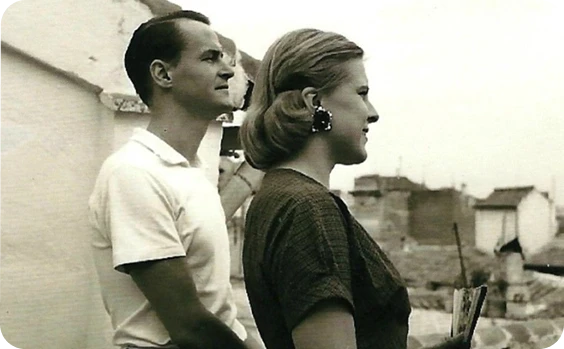

John and Brita ran the Cordoba school for six years, then returned to London in 1959 with two big ideas: raise the standards of English teaching through a network of affiliated schools, and create practical teacher training for the classroom.
At the time, practical training for English language teachers was virtually non-existent. The Haycrafts launched an intensive, hands-on teacher training course in 1962 the first of its kind.
It was ground-breaking: a practical short course that was the first to incorporate compulsory observed teaching practice. It had reflective practice, classroom observation, and idea-sharing at its core.
That course became the IH Certificate, which evolved through the Royal Society of Arts and then Cambridge into the qualification we know today as CELTA. One could say that John Haycraft and International House invented the modern profession of ELT teacher training.



A fervent internationalist, John Haycraft strove to promote international understanding through language learning. Teachers who trained at IH were encouraged and supported to start their own schools.
By the mid-1960s, IH schools had opened in Italy and Portugal. Through the 1970s and 1980s, the network expanded into Argentina, Egypt, France, Germany, Japan, Singapore, Spain, Thailand, Turkey, and kept going into Australia, Austria, Brazil, Finland, Georgia, Hungary, Oman, Poland, and beyond.
The Haycrafts also pioneered the DTEFLA course the forerunner of the Delta.
Each school is independently owned and operated, united by shared standards of teaching quality and teacher development. Different sizes, different markets, different local contexts but the same commitment to doing right by teachers and students.

The network includes 135+ schools in more than 45 countries. Over 5,000 teachers are employed worldwide. Thousands earn their CELTA, Delta, and specialist qualifications at IH centres every year. The job board connects qualified teachers with opportunities across the network.
We are still known for high-quality language teaching, teacher training, and teaching young learners. And we are still innovating. The founding principle has not changed: invest in teachers, and everything else follows. That idea built this network. It is still the idea that runs it.